Cowboy Birthday Font Review
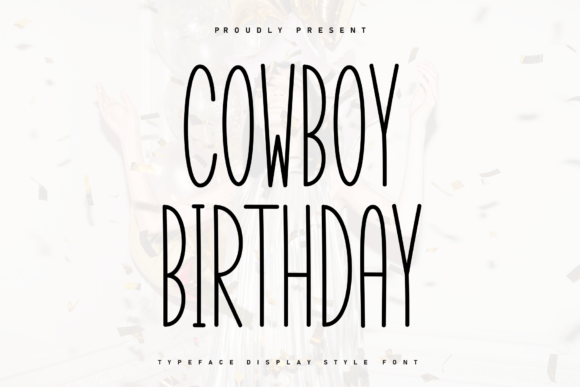
There I was, staring at a blank brand board, trying to find the right visual voice for a new artisanal café concept. The client wanted something warm, approachable, and a little nostalgic—like the kind of place where you could sip coffee and feel like you’re in a small town with a story to tell. That’s when I pulled up Cowboy Birthday, a charming handwritten font filled with a sense of heartfelt perfection. Its smooth strokes and organic lines immediately evoked a relaxed atmosphere, making it perfect for a variety of design projects.
Cowboy Birthday for Logo Design and Brand Identity
Cowboy Birthday works best as a display font, especially when used in logo design and brand identity. I tested it on a few logo drafts, and the results were consistently pleasing. The font has a natural flow that feels handcrafted, which gives it an authentic edge. When paired with a simple icon or symbol, it can create a strong visual signature that stands out without being overwhelming.
One of the things I noticed is how well it balances personality and clarity. It’s not so wild that it becomes illegible, but it still has enough character to make a statement. This makes it ideal for brands that want to communicate warmth and creativity without sacrificing professionalism.
Testing Cowboy Birthday on a Packaging Mockup
I took the font to a packaging mockup for a local bakery, and it fit beautifully. The rounded edges and flowing lines gave the labels a friendly, inviting look. It worked well for both product names and taglines, adding a personal touch that felt genuine. Even when scaled down, the font retained its charm, which is a big plus for small packaging elements.
However, I did notice that in some cases, the lowercase letters can be a bit too similar to each other, which might cause confusion in longer text. That’s why I’d recommend using it as a headline or accent font rather than for body copy.
Cowboy Birthday for Web Design and Social Media Graphics
When I placed Cowboy Birthday on a website header for a creative studio, it added a unique flair that made the site feel more personal. The font’s organic nature contrasted nicely with a clean sans-serif for the body text, creating a balanced and visually engaging layout.
On social media, it performed just as well. I used it for a post about a handmade shop, and the font’s casual yet polished look resonated with the audience. It’s great for headlines, captions, and callout text, especially when paired with bold colors or minimal backgrounds.
Using Cowboy Birthday on Business Cards and Print Materials
Business cards are another area where Cowboy Birthday shines. I designed a few mockups, and the font looked sharp and professional. The subtle variations in the letterforms gave each card a custom feel, which is exactly what the client was going for. It also worked well when combined with a serif font for the address and contact information, creating a layered, sophisticated look.
For print materials like flyers and posters, the font held up well. It had enough detail to catch the eye but wasn’t so intricate that it became hard to read from a distance. This makes it a solid choice for promotional materials that need to stand out while maintaining readability.
Cowboy Birthday for Editorial and Commercial Design Assets
In editorial design, Cowboy Birthday added a human touch to magazine layouts and newsletter headers. It felt right at home alongside illustrations and photographs, offering a soft contrast to more structured typography. For commercial design assets like templates or branding kits, it provided a cohesive, expressive element that elevated the overall aesthetic.
One thing to keep in mind is that Cowboy Birthday isn’t the best choice for formal or corporate projects. Its casual, handwritten style may not align with the tone of a law firm, financial institution, or high-end luxury brand. But for anything with a creative, artisanal, or lifestyle angle, it’s a top pick.
Font Pairing Advice with Cowboy Birthday
When pairing Cowboy Birthday with other fonts, I found that it works well with both serif and sans-serif typefaces. A classic serif like Georgia or Playfair Display adds elegance, while a modern sans-serif like Montserrat or Lato brings balance. It also pairs nicely with other handwritten fonts for a more eclectic, layered look.
For a more refined appearance, I’d suggest using it as an accent or headline font. In larger sizes, it commands attention, but in smaller sizes, it can become less legible. That’s why I always test it in different contexts before finalizing a design.
Before using Cowboy Birthday in any client project, I recommend checking the commercial licensing terms. Make sure it’s suitable for your intended use, whether it’s for a website, print material, or digital product. Most fonts come with clear guidelines, but it’s always better to double-check to avoid any legal issues later on.