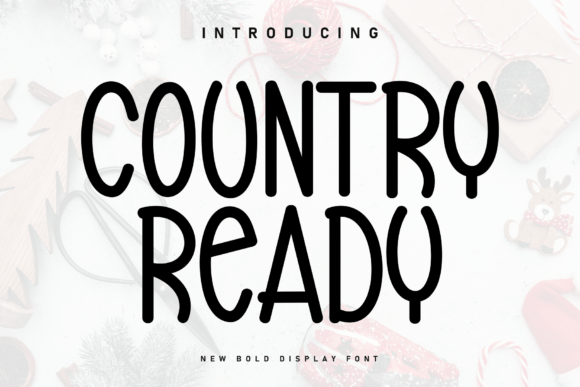
Country Ready Font Review
Choosing the right font for a project can feel like selecting the perfect accessory for an outfit—subtle, yet essential. For a recent lifestyle blog redesign, I found myself drawn to Country Ready, a sweet and beautiful handwritten font that exudes warmth and personality. As a display font, it brings a cozy accent to any design project, making it ideal for editorial layouts where visual rhythm and mood matter.
Country Ready for Lifestyle Blog Headers and Article Titles
When updating a lifestyle blog’s header, I wanted something that felt approachable and inviting. Country Ready delivered exactly that. Its characters dance along the baseline, creating a soft, flowing movement that feels natural on the page. Used as a headline or article title, it adds a touch of elegance without overwhelming the reader. The font pairs well with a clean serif or sans serif typeface, allowing the text to breathe while maintaining visual interest.
For a blog focused on home decor and self-care, Country Ready provided the perfect tone. It reinforced the brand’s warm, personal voice while standing out in a sea of more rigid, formal fonts. Whether used for section headings or featured pull quotes, it brought a sense of authenticity to the content.
Country Ready for Recipe Ebooks and Printable Guides
Creating a printable recipe ebook recently, I needed a font that could convey both charm and clarity. Country Ready worked beautifully for cover titles and chapter openers. Its handwritten style gave the ebook a handcrafted feel, which resonated with the target audience looking for cozy, DIY-inspired content.
However, I also tested it for longer text blocks, and while it remained readable, it wasn’t the best choice for dense paragraphs. In such cases, pairing it with a more structured font like a serif or sans serif improved overall legibility. This combination allowed the handwritten font to shine in headlines and decorative elements without compromising readability in body text.
Country Ready for Wedding Guides and Editorial Layouts
When designing a wedding guide for a client, I was looking for a font that could balance sophistication with a personal touch. Country Ready fit the bill perfectly. Its soft, flowing script added a romantic and intimate vibe, making it ideal for titles, captions, and decorative accents in a wedding-themed publication.
As a display font, it excelled in headers and pull quotes, drawing attention without being distracting. Its unique character made it stand out in editorial layouts, especially when paired with a neutral, modern typeface for body copy. This contrast helped maintain visual hierarchy and ensured the content remained easy to follow.
Country Ready for Newsletter Graphics and Social Media Posts
For a weekly newsletter, I experimented with using Country Ready in graphic elements and social media posts. It worked well as a decorative accent, adding a friendly, handmade feel to promotional banners and feature boxes. Its expressive nature made it perfect for highlighting key messages or creating eye-catching callouts.
On mobile devices, the font maintained its clarity, though I noticed that smaller sizes could become slightly less distinct. This is important to consider when using it for captions or footnotes. Still, for larger text areas like headlines or featured images, it performed admirably, reinforcing the brand’s aesthetic without sacrificing usability.
Country Ready for Coaching Workbooks and Digital Magazines
In a coaching workbook project, I used Country Ready for section titles and motivational quotes. Its organic flow complemented the content’s encouraging tone, making it feel more personal and engaging. The font’s softness helped create a welcoming atmosphere, which was crucial for a product aimed at self-improvement and mindfulness.
For digital magazines, it served as a strong visual anchor, particularly in editorial features where storytelling was key. It enhanced the emotional impact of the content, making the layout feel more dynamic and expressive. However, I avoided using it for long-form articles, opting instead for a more traditional typeface to ensure sustained readability.