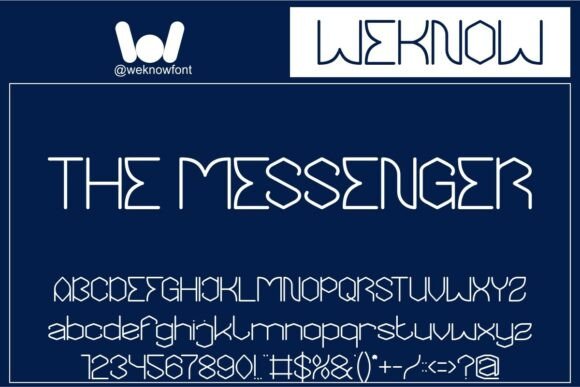
The Messenger Font
As a marketing designer, I often find myself in the middle of a campaign workflow where the right font can make or break a visual. Recently, I was tasked with creating a product launch graphic for a tech startup’s new smartwatch. The brief called for something that felt cutting-edge and modern—something that could stand out in a crowded digital space. That’s when I turned to The Messenger, a display font that promises a blend of technological sophistication and futuristic elegance.
The Messenger for Product Launch Graphics and Tech Branding
The Messenger is more than just a font—it’s a design statement. Its geometric structure and modular nature give it a clean, high-tech look that feels instantly recognizable. When I used it for the product launch graphic, it immediately added a sense of authority and innovation. The sharp edges and balanced spacing made the text pop against the background, while the overall style aligned perfectly with the brand’s identity.
In this case, The Messenger worked best as a headline font. It didn’t overwhelm the visuals, but it commanded attention. For tech brands looking to communicate modernity and precision, this font is a strong choice. It pairs well with minimalist layouts and bold color schemes, making it ideal for website banners, social media posts, and promotional emails.
The Messenger for YouTube Thumbnails and Social Media Content
One of the most critical moments in any content strategy is the thumbnail. It’s the first thing viewers see, and it needs to grab attention fast. When designing a YouTube thumbnail for a video about AI trends, I experimented with The Messenger as the main text overlay. The result was striking—its clean lines and futuristic feel made the thumbnail feel like it belonged in a sci-fi movie poster.
On mobile screens, The Messenger holds up surprisingly well. Even at smaller sizes, the characters remain legible, which is essential for thumbnails that are often viewed on phones. It also works well with dark backgrounds, where its contrast shines through. However, I would avoid using it for long captions or dense text blocks. For that, a simpler sans serif might be more appropriate.
The Messenger for Instagram Posts and Branded Templates
Instagram is all about visual storytelling, and The Messenger adds a unique flair to posts that aim to stand out. I used it in a series of branded templates for a digital marketing agency. The font brought a sense of professionalism and creativity to each post, making the content feel cohesive yet dynamic.
For Instagram stories and reels covers, The Messenger delivers a strong visual impact. Its modular design allows for creative spacing and alignment, which is perfect for eye-catching overlays. However, I found that it works best in short, punchy phrases rather than lengthy captions. Pairing it with a soft script font for subheadings helped balance the design without overwhelming the viewer.
The Messenger for Digital Ads and Web Banners
Digital ads require fonts that can convey a message quickly and clearly. The Messenger proved to be an excellent choice for a web banner promoting a new online course. Its clean, structured look gave the ad a professional edge, while the futuristic vibe aligned with the course’s theme of innovation and growth.
When used in web banners, The Messenger benefits from ample white space. It doesn’t work as well in cluttered designs where the text is competing for attention. For digital ads, I recommend using it for headlines and call-to-action buttons. It’s not ideal for body text, but as a display font, it excels in creating visual hierarchy and guiding the viewer’s eye toward key messages.
The Messenger for Email Banners and Promotional Graphics
Email marketing is another area where The Messenger shines. I incorporated it into an email promotion for a seasonal sale, using it as the main header. The font’s modern aesthetic gave the email a fresh, energetic feel that matched the campaign’s tone. It also helped reinforce brand recognition, as the same font was used across other promotional materials.
For email banners, The Messenger is best used sparingly. Too much of it can feel overwhelming, especially in a medium where readability is key. I paired it with a simple sans serif for the body text, which created a nice contrast and improved overall legibility. This combination worked well for both desktop and mobile views, ensuring that the message remained clear no matter how the email was opened.